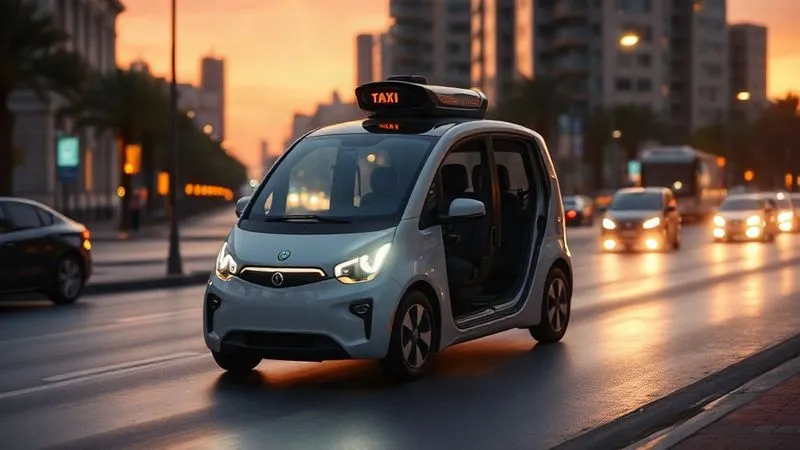
Tesla Cybercab Turns a 10-Minute Austin Trip Into a 70-Minute Detour
- News
- Rocks on Galaxy
- Tesla
- 16 Sep, 2026
- 2
Robotaxi demos love short, flattering hops. Reality in Austin is messier. On September 14, 2026, Electrek reported a rider’s Cybercab trip from 99 Ranch Market to the Domain in north Austin—normally about 10 minutes on the highway—stretched to roughly 70 minutes on surface streets.
Why the long way around
Per Electrek’s account and community explanation, the vehicle avoided freeways and at-grade railroad crossings, staying parallel to Capital Metro’s Red Line until it could use an East Austin bridge. That policy turns a simple northbound hop into a meandering urban tour when the fast path is Interstate plus rail-adjacent shortcuts.
The fare for the meandering ride was about $20—not catastrophic for a curiosity trip, but a poor look if the product pitch is “cheaper and faster than a human Uber.”
Fleet-wide software limits
Electrek notes the same no-highway software constraints apply to Model Y robotaxis in the Austin fleet, not only the two-seat Cybercab. That matters for capacity planning: as more unsupervised or lightly supervised rides go live, surface-street congestion and rail-crossing avoidance become product features, not one-off bugs.
What this does not prove
A single rider anecdote is not a latency SLA. It is, however, a concrete illustration of how conservative ODD (operational design domain) choices can erase the time advantage of autonomy. Tesla can loosen highway or crossing policies later; until then, Austin riders should budget like a cautious city cab, not a highway express.
Rocks take
Watch for Tesla software notes that re-enable controlled freeway segments or grade-separated rail solutions. Until then, treat Cybercab ETAs near rail corridors as soft. Source: Electrek.
Surface streets vs. autonomy marketing
Avoiding highways reduces some high-speed edge cases; avoiding at-grade crossings reduces rail-incident risk. Both are defensible safety choices. The marketing problem is that Austin’s geography punishes those choices hard between grocery corridors and The Domain. Competitors that already use freeways will win the “got me there in 12 minutes” screenshots until Tesla expands the ODD.
For Rocks readers tracking Robotaxi readiness, log not only disengagement counts but also time inflation vs. Google Maps driving baselines on the same OD pairs.
What Austin riders should do meanwhile
If you are evaluating Cybercab for real errands, duplicate Electrek’s experiment: same origin/destination, compare Google Maps drive time, Cybercab ETA, and final fare. Rail-adjacent north Austin routes are a stress test; downtown grid hops may look far kinder. Share anonymized traces if Tesla’s app exposes route polylines—public datasets of time inflation will matter more than keynote autonomy miles.
Regulators and city partners should also note that “safe but slow” autonomy still occupies curb and arterial capacity. A fleet that systematically avoids highways concentrates robotaxi traffic onto surface streets that already serve buses and bikes.
FAQ
Was this only Cybercab? Electrek says the same no-highway limits apply to Model Y robotaxis too.
How much was the fare? About $20 for the reported ride.