Mirai Green Factory Kijo: Japan’s New AI-Controlled Cucumber Greenhouse
- News
- Rocks on Galaxy
- Plantes
- 15 Oct, 2026
- 0
Miyazaki grows more cucumbers than any other Japanese prefecture, but like farming everywhere it faces erratic weather and a shortage of new growers. On October 13, 2026, local operator KEI LLC held the completion and opening ceremony of the Mirai Green Factory Kijo (“future green factory”) in the town of Kijo, as UMK TV Miyazaki reported (also on FNN).
A tall greenhouse without soil
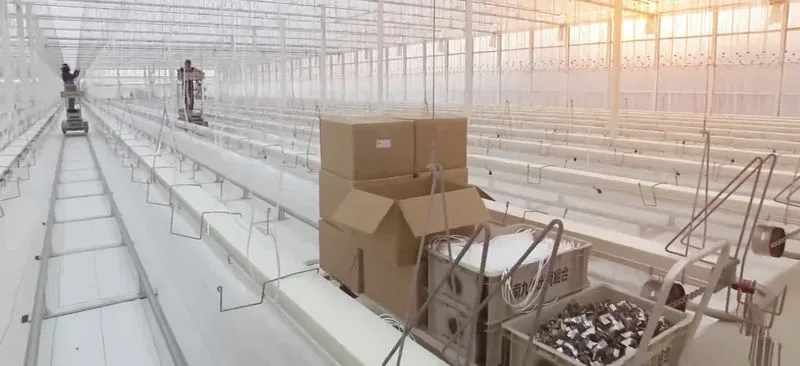
The glasshouse covers about 1.5 hectares and stands more than 5 metres tall — roughly twice the height of a typical greenhouse, according to the reporter on site. It was built with a ¥400 million national government grant. As HortiSignal points out, that is the grant, not the full project cost, which hasn’t been disclosed.
Cucumbers will be grown in nutrient-solution (soilless) culture. A KEI staff member showed the sponge-like substrate where the roots develop: the seedling sits on it, and a drip line delivers water mixed with fertiliser.
AI proposes, humans decide
The facility uses an environmental-control system that manages sunlight, water and CO2 for photosynthesis. KEYWARE SOLUTIONS explained that AI works out in the background how to manage light and temperature at each time of day; staff then review the resulting parameters and the whole greenhouse is controlled accordingly. The goal is to reduce workload and stabilise quality and income.
KEI’s representative Makoto Kuroki said he started the project to respond to climate change and help train successors, adding that cleaner, AI-assisted farming could attract newcomers to a sector long dominated by small family farms.
The calendar
- October 26: planting begins
- Late November: first harvest
- 70 tonnes of cucumbers per year planned
These are targets: nothing has been harvested yet, and no yield, energy or labour results are available.
Rocks take
The interesting idea is the human-in-the-loop setup: AI suggests, growers validate. It’s the same logic we use at home with plant sensors and Home Assistant — automation does the maths, but you keep a hand on the dial. We’ll check back after the first harvest to see whether the 70-tonne goal holds up.